






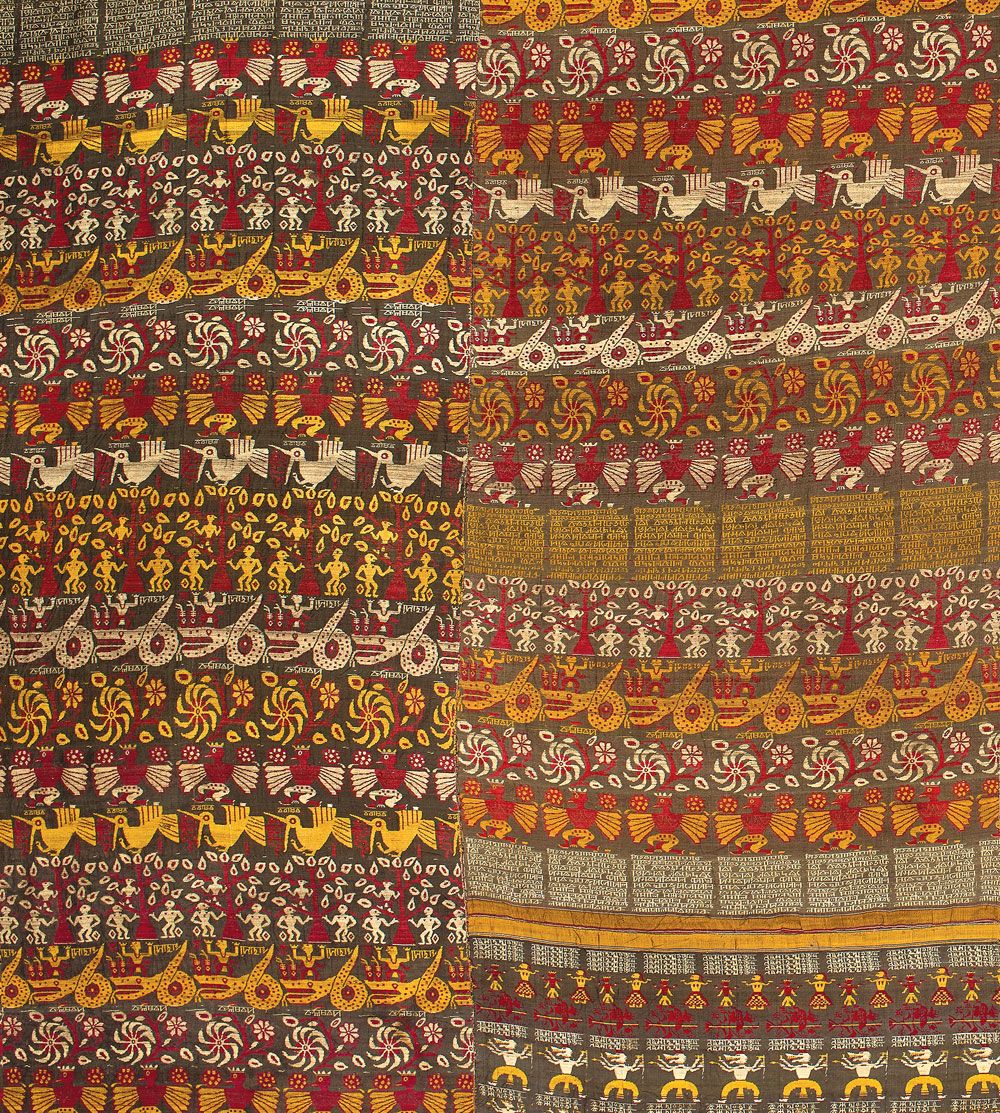
The story of the Vrindavani Vastra is a gripping saga that spans across empires, high-altitude mountain passes, and a century of mistaken identity.
February 22, 2026 | By Jamini Editorial
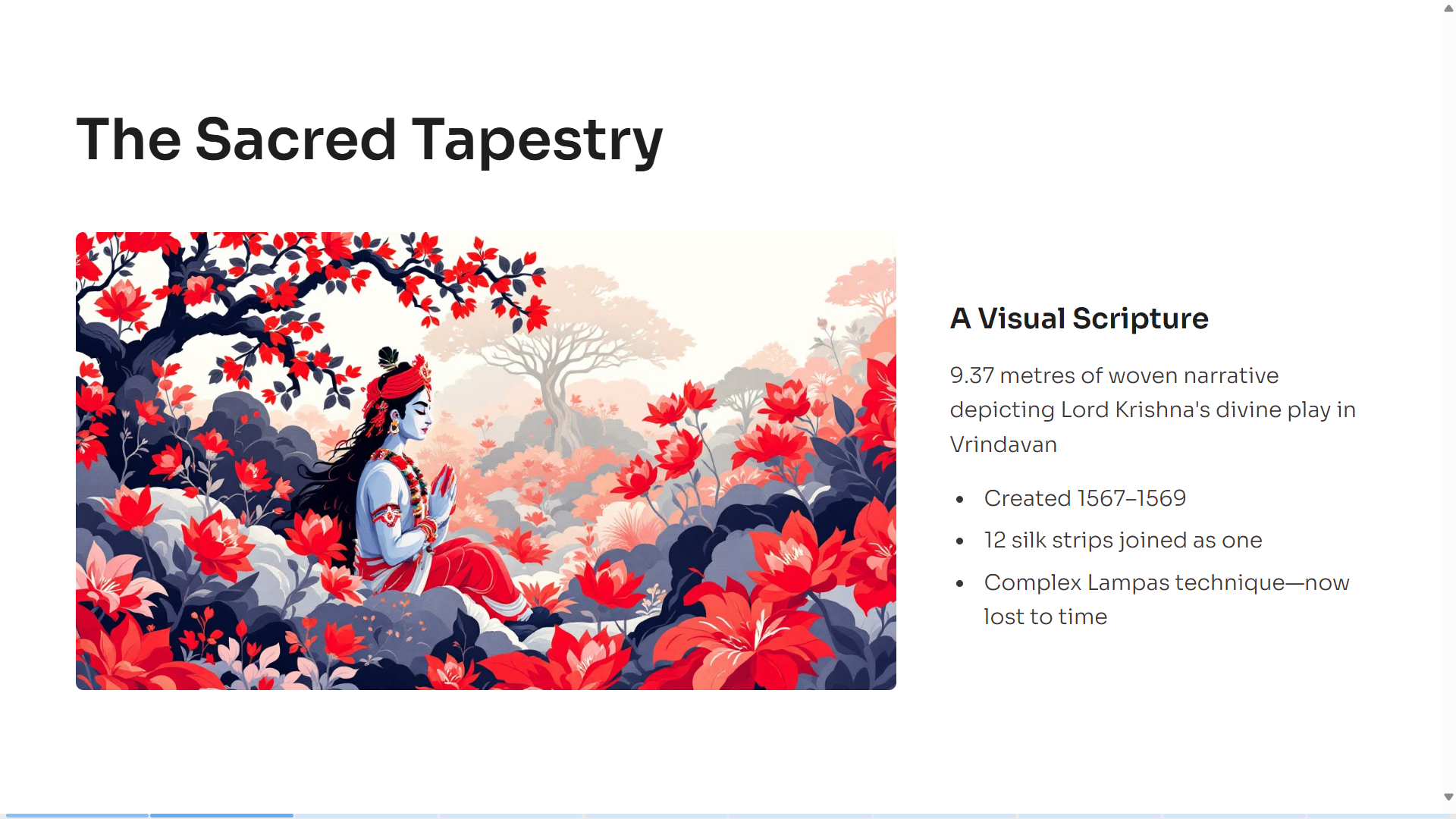
The Bhumi Pujan held today in Guwahati isn’t just for a museum; it is the final chapter in a “whodunit” that began 450 years ago. The Vrindavani Vastra—a 9.37-metre silken tapestry of Lord Krishna’s Lilas—has traveled a distance and a height that seems almost impossible for a fragile textile.
Here is how a masterpiece woven in the plains of Patbausi ended up in a climate-controlled vault in London.
1. The Genesis: Weaving a Vision (1567–1569)
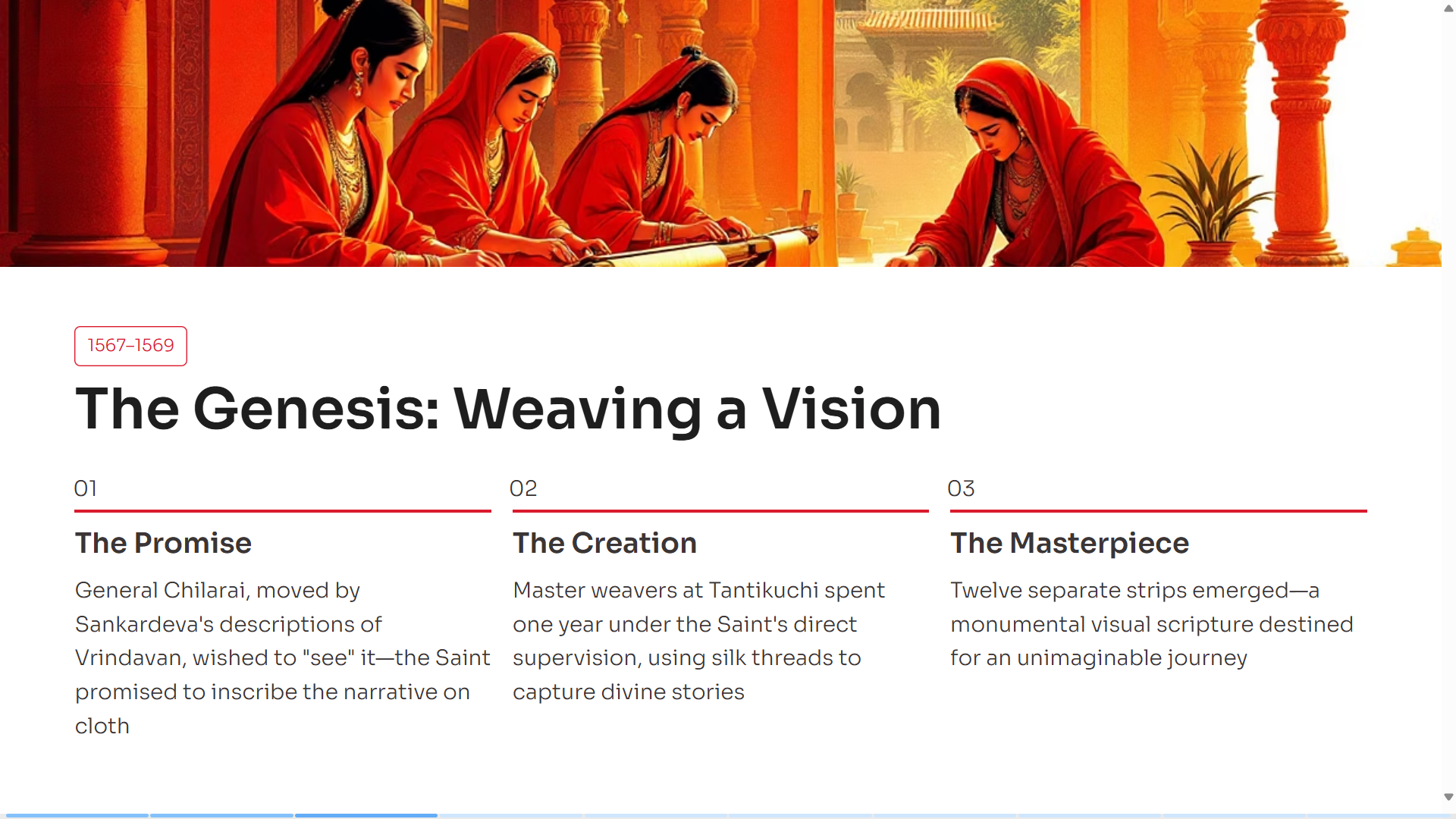
The journey began at the royal court of the Koch King Nara Narayan. His brother, the legendary general Chilarai, was so moved by Srimanta Sankardeva’s descriptions of Vrindavan that he wished to “see” it. Sankardeva promised to “inscribe” the narrative on cloth.
Under the Saint’s direct supervision, the weavers of Tantikuchi (modern-day Barpeta) spent roughly one year using the complex, now-lost Lampas technique. They wove 12 separate strips of silk, which were eventually joined to create a monumental visual scripture.
2. The Mysterious Exit: Bhutan and Tibet
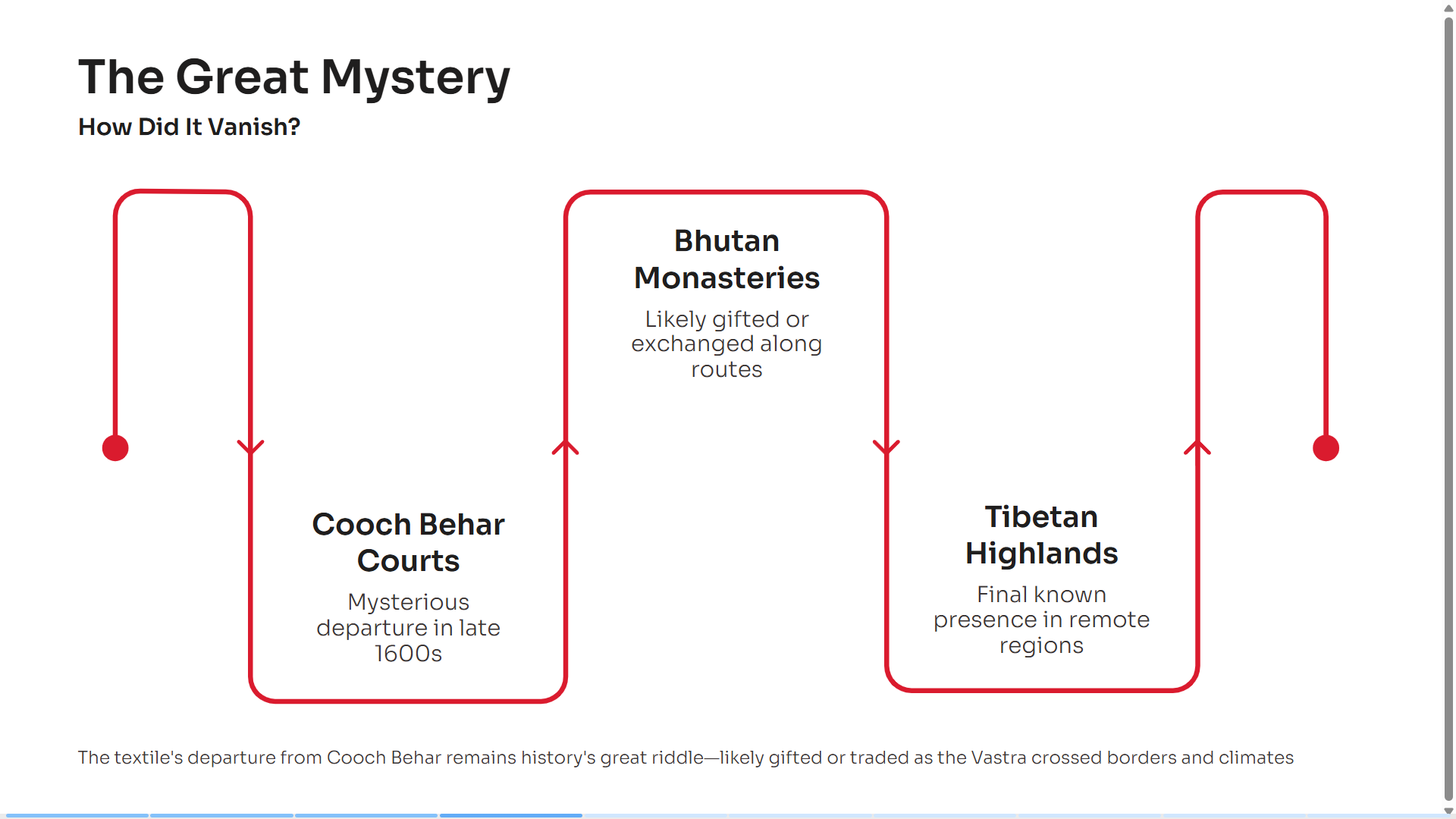
How the Vastra left the royal courts of Cooch Behar remains one of history’s great riddles. Historians believe it was likely gifted or traded during the late 17th century.
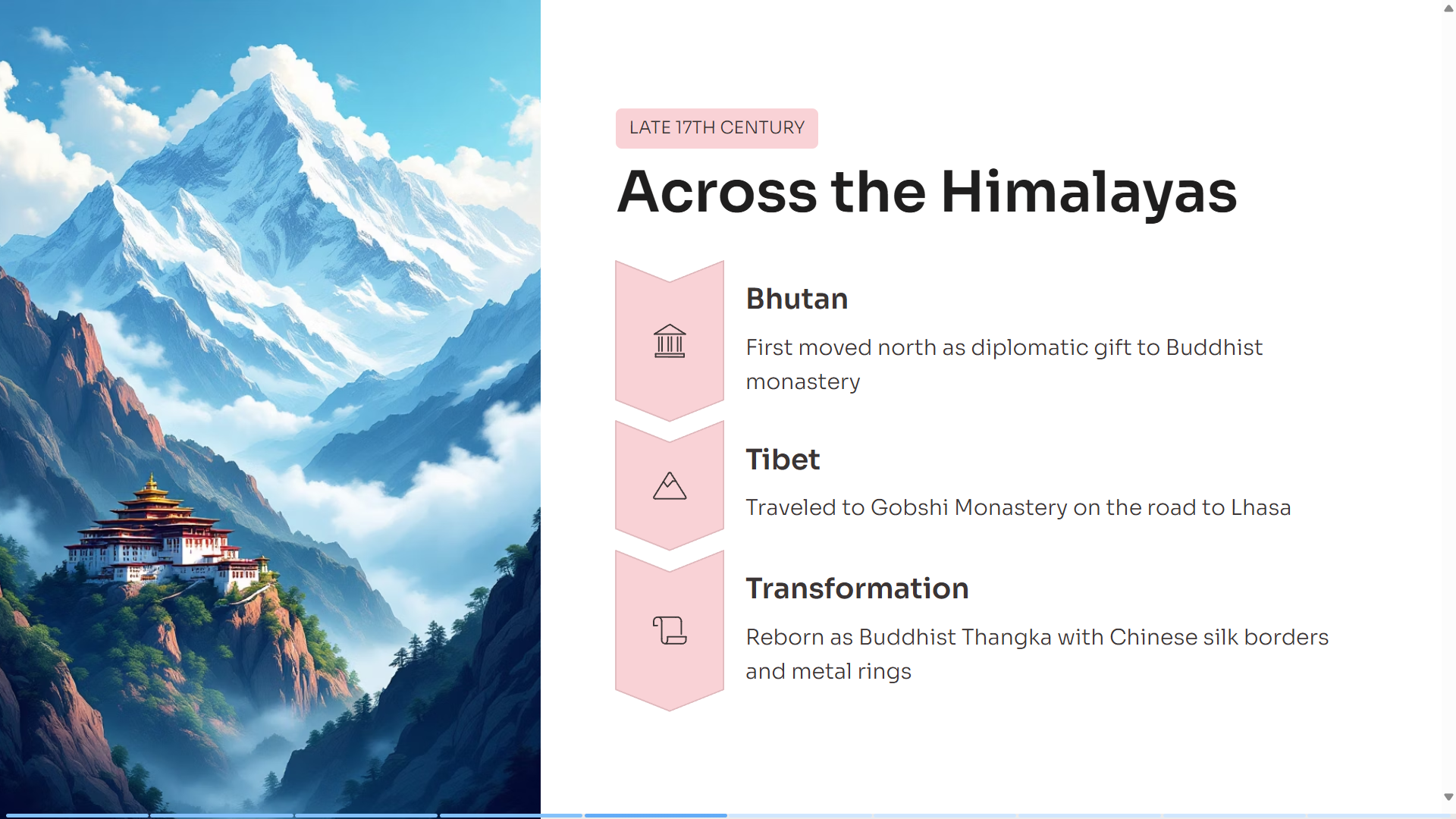
- The Bhutan Connection: Historical records suggest the textile first moved north into Bhutan, possibly as a diplomatic gift to a Buddhist monastery.
- The Tibetan Transformation: From Bhutan, it traveled across the Himalayas into Tibet. It was discovered in the Gobshi Monastery (on the road to Lhasa).
- The Thangka Rebirth: In Tibet, the monks—perhaps unaware of its Vaishnavite origins—revered it because it came from the “Land of Buddha.” They stitched the 12 strips together, added a broad Chinese silk border, and attached metal rings to hang it like a massive Buddhist Thangka.
3. The Colonial Encounter (1903–1904)
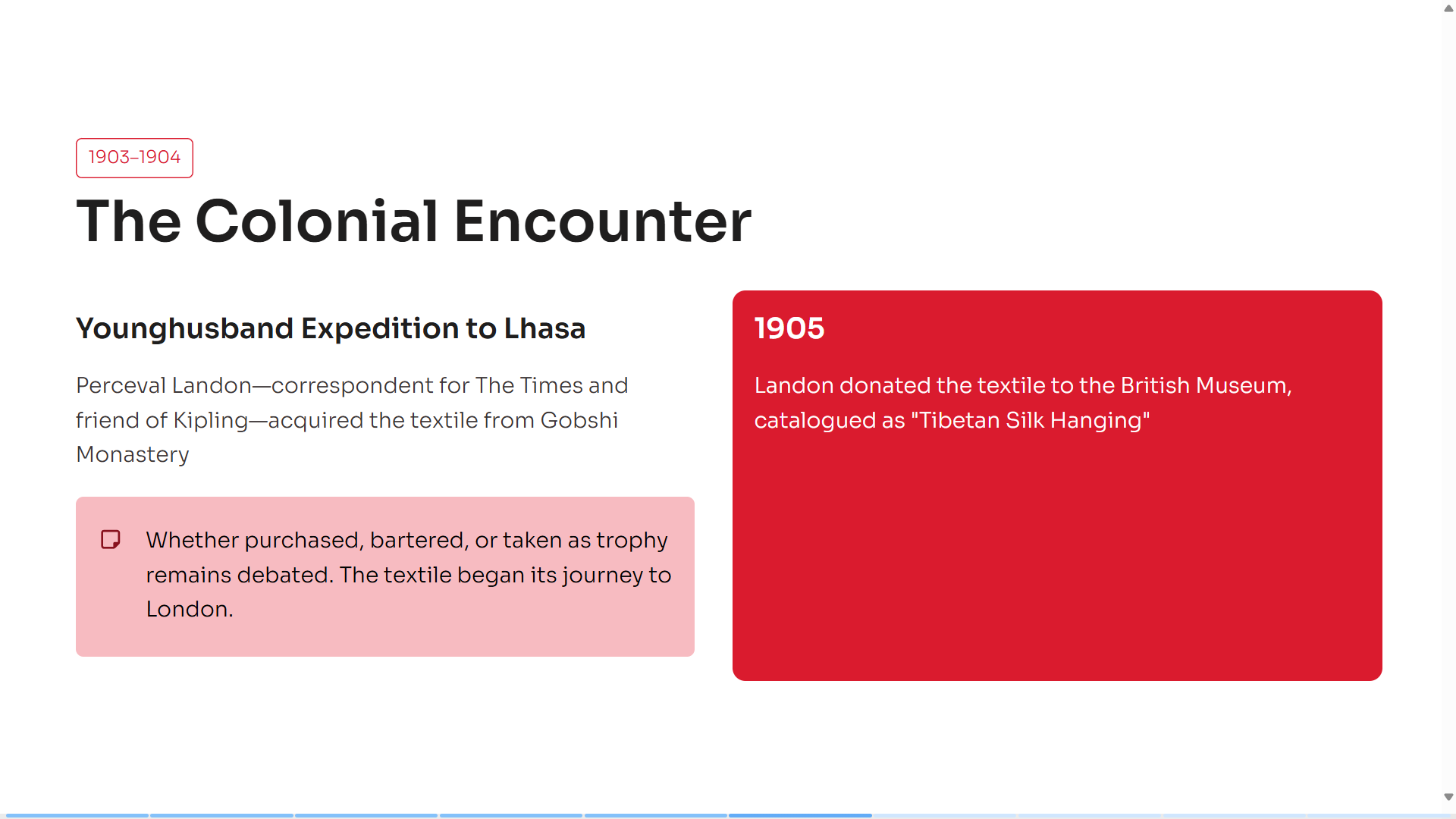
The Vastra’s journey to the West began during the controversial Younghusband Expedition to Lhasa. Perceval Landon, a special correspondent for The Times (London) and a close friend of Rudyard Kipling, accompanied the British military mission.
While in the Gyantse region of Tibet, Landon acquired the textile from the Gobshi Monastery. Whether it was purchased, bartered, or taken as a trophy remains a subject of debate. In 1905, Landon donated the textile to the British Museum, labeling it as a “Tibetan Silk Hanging.”
4. A Century of Mistaken Identity (1905–1992)
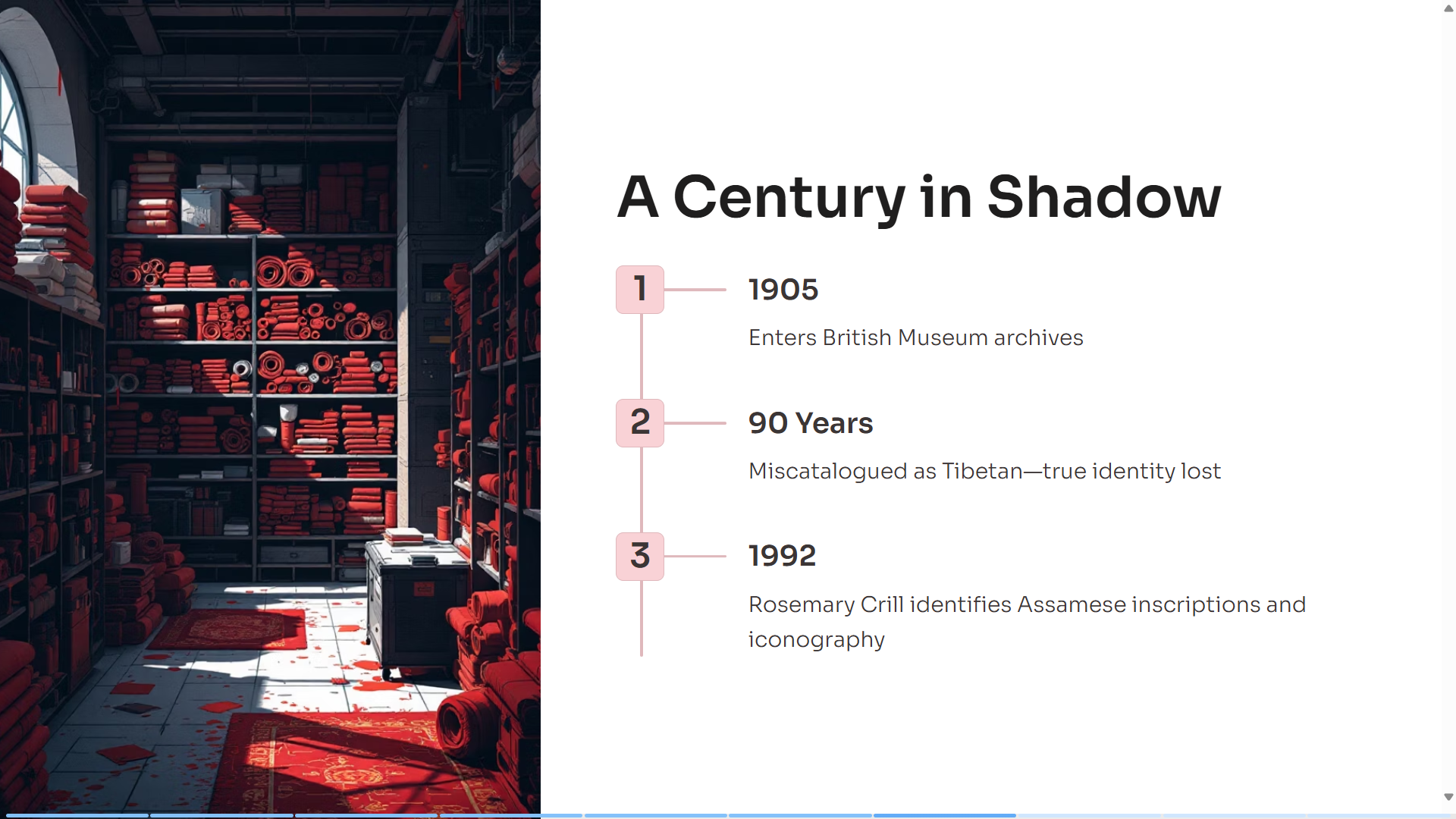
For nearly 90 years, the Vrindavani Vastra lay in the archives of London, miscatalogued as “Tibetan Silk Lampas.” Because of the Chinese borders and its Tibetan provenance, curators assumed its origin was Himalayan.
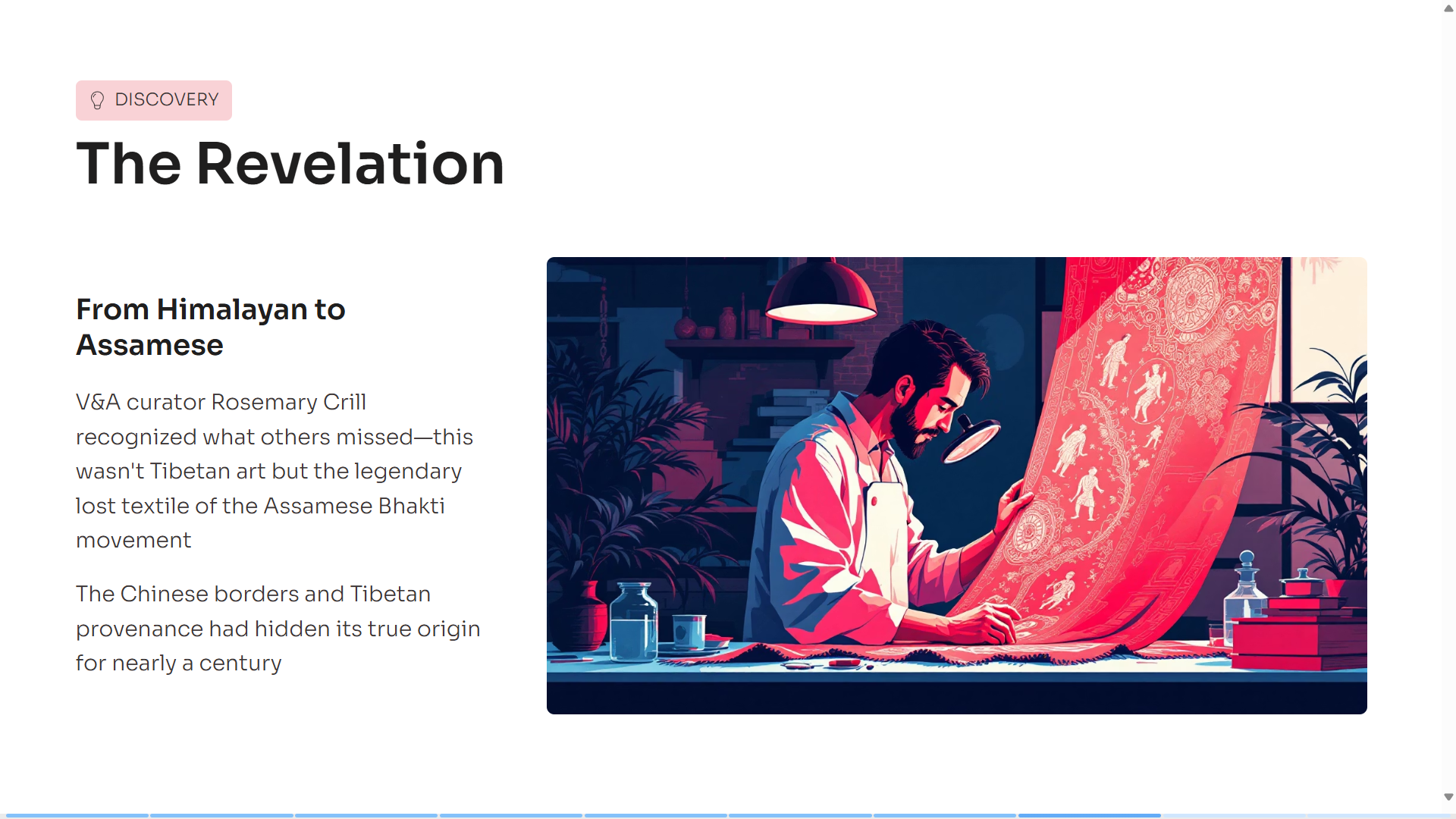
It wasn’t until 1992 that Rosemary Crill, a curator from the Victoria & Albert Museum, identified the iconography and the Assamese inscriptions. She realized this wasn’t Tibetan art, but the legendary “lost” textile of the Assamese Bhakti movement.
5. The Homecoming (2027)
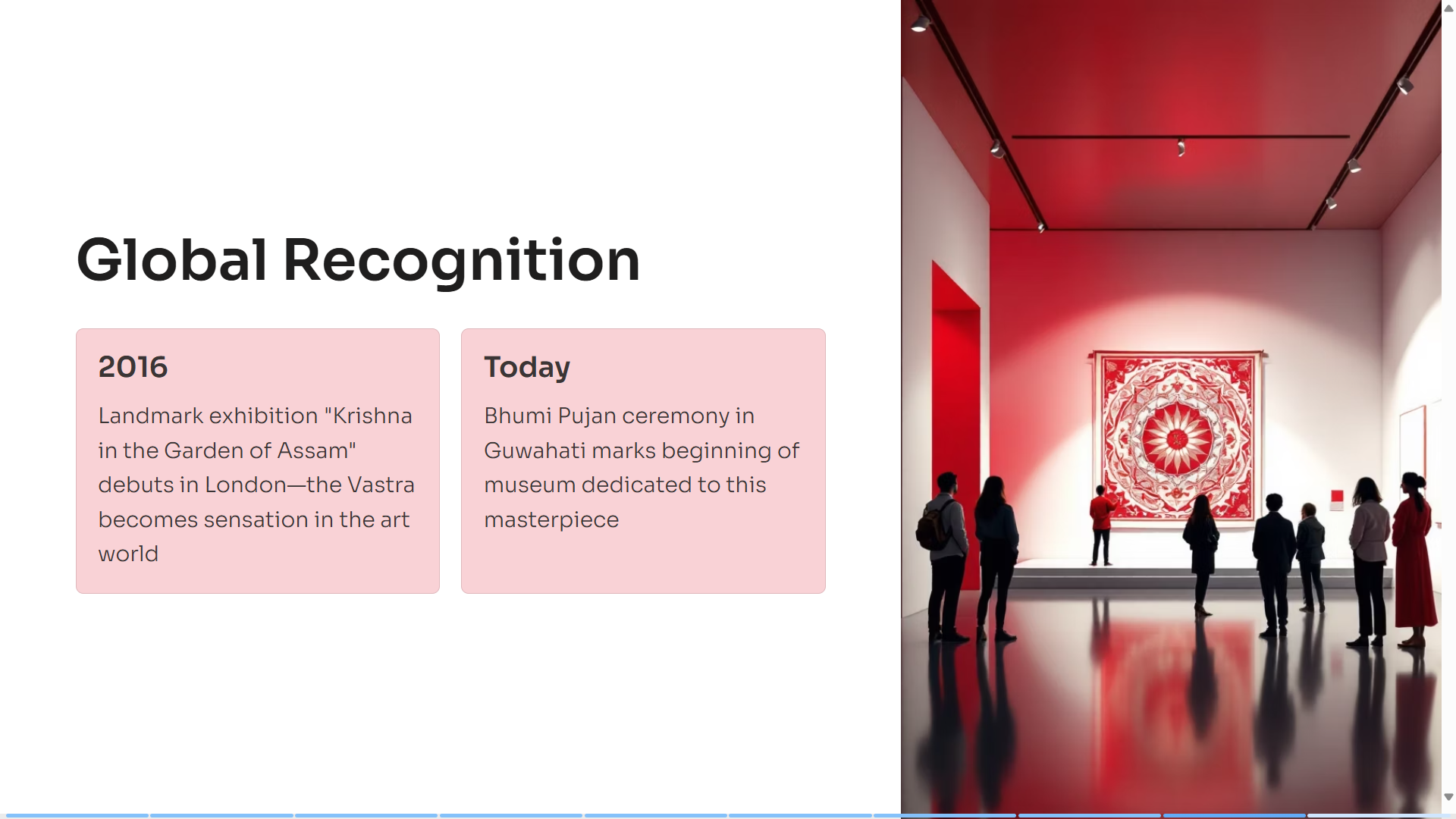
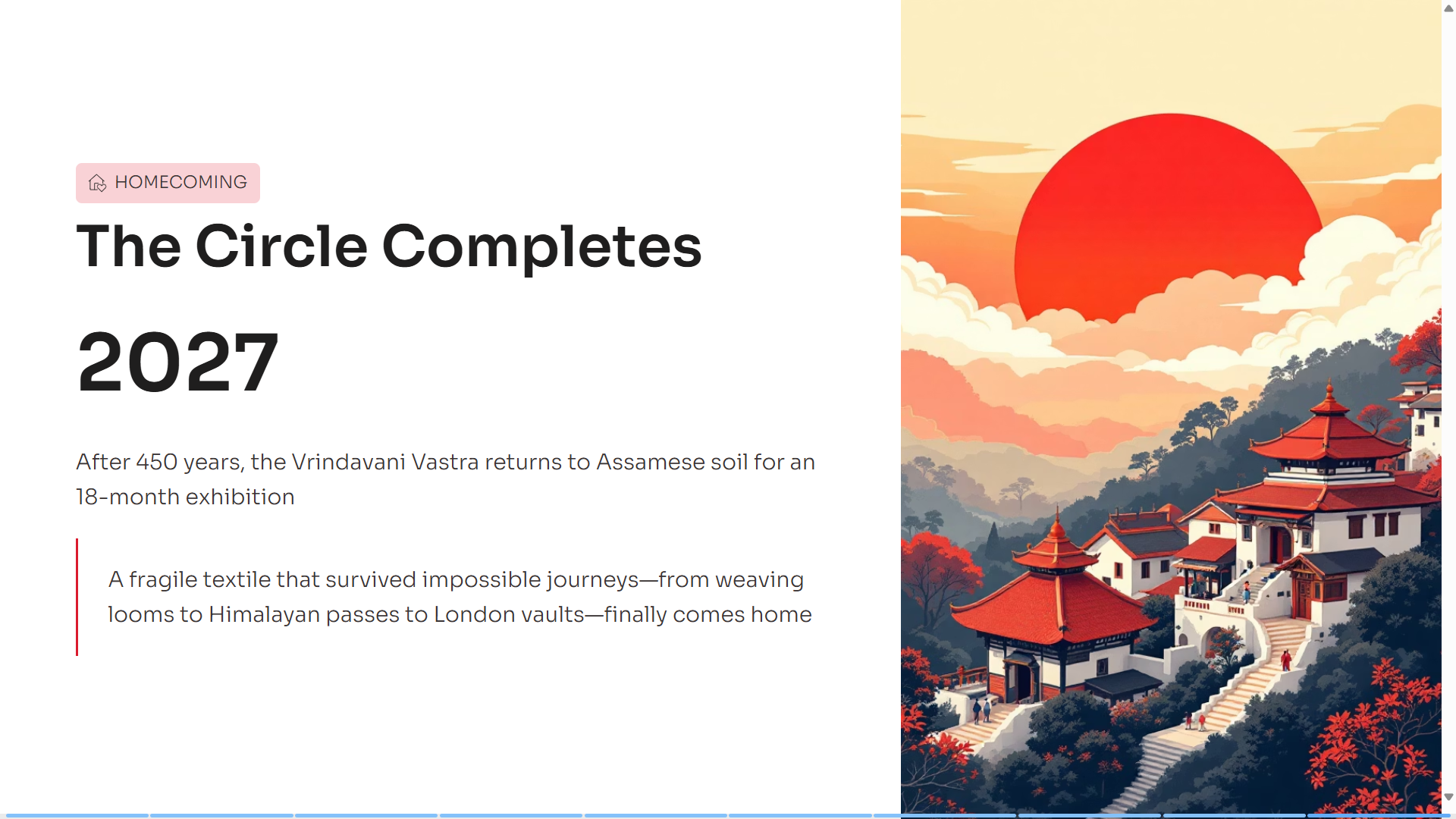
After the discovery, the Vastra became a sensation in the art world, leading to the landmark 2016 exhibition “Krishna in the Garden of Assam” in London. Now, following today’s ceremony, the stage is set for the textile to return to the soil of its birth for an 18-month exhibition in 2027—completing a circle of five centuries.
Timeline of the Vastra