







By Assam Muse Editorial | March 3, 2026
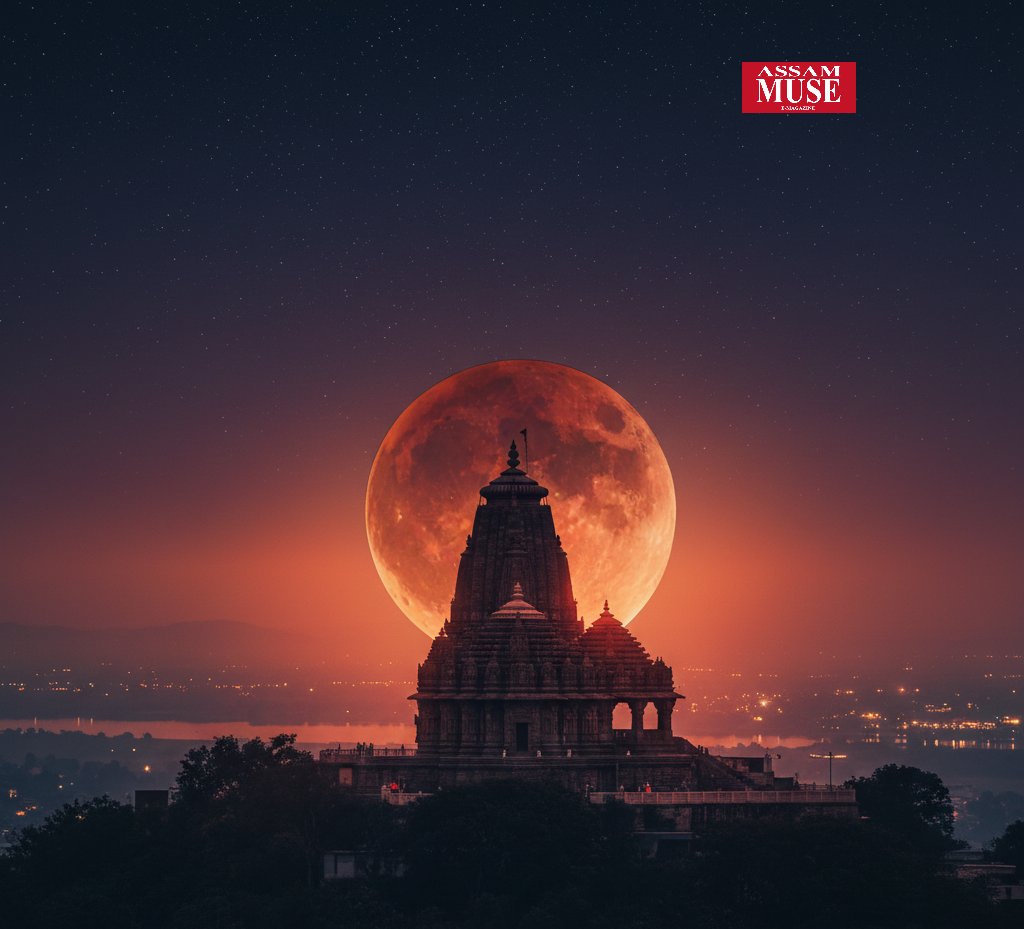
GUWAHATI: In a spectacular celestial coincidence not seen in nearly 100 years, the festival of colors, Holi (Dol Jatra), will share the stage with a Total Lunar Eclipse tonight, March 3. While most of India will only catch the tail-end of the event, the “Blood Moon”—a deep coppery red hue caused by the Earth’s shadow—will be visible in its full glory across the skies of Assam and the Northeast.
A Rare “Moonrise Eclipse”
Unlike typical eclipses that occur late at night, this event will begin while the Moon is still below our horizon. In Guwahati and across Assam, the Moon will rise already in its eclipsed state, offering a dramatic sight as a giant red orb appears in the eastern sky just as the sun sets.
Key Timings for Assam (March 3, 2026):
- Sutak Kaal Begins: 6:23 AM (Traditional period of restriction)
- Moonrise in Guwahati: 5:22 PM (The Moon rises already eclipsed)
- Maximum Totality (The Red Phase): 5:25 PM to 5:32 PM (Only a 7-minute window for the deep red “Blood Moon”!)
- Partial Phase Ends: 6:47 PM
- Eclipse Fully Ends: 7:53 PM
The Science Behind the Red
The “Blood Moon” is not a sign of doom but a beautiful atmospheric trick. During a total eclipse, the Earth blocks direct sunlight. However, the Earth’s atmosphere bends (refracts) red light and casts it onto the Moon—the same process that makes our sunsets red.
Holi Rituals and the Grahan
Because the eclipse is visible in India, the Sutak Kaal (spiritual cleansing period) is being observed by many.
- Holika Dahan: Most scholars suggest performing the Dahan rituals either before the Sutak begins at dawn or after the eclipse fully clears at 6:47 PM tonight.
- Viewing Safety: Unlike a solar eclipse, a lunar eclipse is 100% safe to watch with the naked eye. No special glasses are needed.